Do you spend more time thinking about the future or the past? Why?
Most people assume this is a personality question. It’s not. It’s a survival question.
For years, my attention lived in the past—not because I was nostalgic, but because I was trying to understand what went wrong. Chronic illness, neurological instability, disability, and long stretches of uncertainty have a way of forcing you to replay life in reverse. You analyze decisions. You revisit moments. You look for the fork in the road where things might have turned out differently.
That kind of reflection can be useful—briefly. But if it becomes your permanent address, it quietly drains your strength.
The Trap of the Past
The past feels familiar. Even when it hurts, it’s known territory. When your body has betrayed you or your life has been reshaped by things outside your control, the past can feel safer than an unpredictable future. At least you know what already happened.
But here’s the hard truth: the past can explain things, but it cannot heal you. Understanding why something happened is not the same as moving forward from it. I learned that the long way.
The Illusion of the Future
On the other extreme, living in the future can be just as dangerous. When you’re managing health challenges or rebuilding life piece by piece, the future can become an obsession—When will I be better? What if this never changes? What’s next?
That kind of future-focused thinking isn’t hope. It’s anxiety wearing a motivational mask.
Where Real Stability Lives
What finally grounded me wasn’t choosing the past or the future. It was learning to live anchored in the present—while allowing the future to exist without trying to control it.
This is where faith quietly enters the picture. Not religious performance. Not spiritual jargon. Just a steady trust that you don’t need full visibility to take the next step. I didn’t arrive at that understanding overnight. It came slowly, through loss, limitation, and rebuilding life with fewer guarantees than most people expect.
Healing—physical, emotional, spiritual—doesn’t happen in yesterday or tomorrow. It happens in today’s decisions:
What you put in your body How you steward your energy What you give your attention to Whether you choose bitterness or discipline Whether you stay present instead of escaping backward or forward
So, Past or Future?
Today, I don’t live in either.
I let the past teach me without defining me.
I let the future guide me without consuming me.
And I do the real work in the present—where responsibility, faith, and healing actually meet.
If you’re always replaying what was, ask yourself what you’re avoiding now.
If you’re always chasing what’s next, ask yourself what you’re afraid to sit with today.
Clarity doesn’t come from time travel. It comes from attention.
Vitamin B12, or cobalamin, is an essential water-soluble vitamin vital for nerve health, red blood cell formation, DNA synthesis, and brain function—the body cannot produce it and relies on diet or supplements. It acts as a cofactor for key enzymes like methionine synthase, supporting myelination and energy metabolism, with higher deficiency risks for vegans and older adults.
For individuals with chronic health conditions, allergies, epilepsy, diabetes, heart disease, or other medical concerns, having a quick and effective way to communicate vital health information in an emergency can be life-saving.
Traditionally, medical ID bracelets have served this purpose, offering immediate recognition and access to essential health details for first responders. However, with advances in technology, smartwatches like the Apple Watch now provide additional safety features, including fall detection, heart monitoring, and emergency SOS calling.
So, how do traditional medical ID bracelets compare to modern smartwatches when it comes to health emergencies? Let’s take a deep dive into both options, compare the pros and cons, and determine which is best for you.
Medical ID Bracelets: A Time-Tested Solution
A medical ID bracelet is a simple yet effective accessory designed to provide critical health information to first responders, paramedics, and emergency personnel.
Advantages of Medical ID Bracelets
✅ Instant Recognition – Medical professionals are trained to look for medical ID bracelets first in an emergency. ✅ No Batteries or Charging Required – A permanent and reliable solution without the need for charging, maintenance, or software updates. ✅ Durability – Made from stainless steel, titanium, silicone, or other materials, medical bracelets are designed to be worn 24/7. ✅ Engraved Information – Displays essential details such as medical conditions, allergies, medications, and emergency contacts. ✅ Emergency Medical Information Access – Some medical ID services, like MedicAlert, provide 24/7 access to your full medical record via a unique identification code on the bracelet.
❌ Limited Space for Information – Only a few lines of text can be engraved, which may restrict the amount of medical information available. ❌ No Active Monitoring – Unlike smartwatches, medical ID bracelets do not provide alerts, fall detection, or real-time communication with emergency responders. ❌ No GPS Tracking – If you experience an emergency away from home, a medical ID bracelet won’t notify family or emergency services of your location.
📌 Looking for fashionable medical IDs? Check out Lauren’s Hope for stylish, customizable options.
Apple Watch & Smartwatches: The Modern Alternative
The Apple Watch and other smartwatches (Garmin, Samsung Galaxy Watch, Fitbit) have advanced health monitoring features that can act as a medical alert system, especially for people with heart conditions, epilepsy, or a fall risk.
Key Health & Safety Features on Smartwatches
✅ Fall Detection – If a hard fall is detected, the Apple Watch can automatically call emergency services and notify emergency contacts. ✅ Emergency SOS – Press and hold the side button to instantly call 911 and notify emergency contacts. ✅ Heart Rate Monitoring – Alerts you if your heart rate is too high or too low, which can be helpful for people with cardiac conditions. ✅ ECG & Blood Oxygen Monitoring – Some models (Apple Watch Series 6 and later) have FDA-cleared ECG features to detect atrial fibrillation (AFib). ✅ GPS Tracking – If an emergency occurs, family members and emergency responders can track your real-time location.
Disadvantages of Smartwatches as Medical Alert Devices
❌ Battery Life – The Apple Watch and most smartwatches need to be charged every 1–2 days, which could be a problem in an extended emergency. ❌ Not Instantly Recognized – First responders are trained to look for medical ID bracelets, not smartwatches, so they may not immediately check your digital medical profile. ❌ Subscription Fees for Emergency Services – Some smartwatch brands require monthly fees for advanced fall detection and emergency call services. ❌ More Expensive Than Medical ID Bracelets – An Apple Watch costs $250-$800, whereas a medical ID bracelet costs as little as $20-$50.
Medical ID Bracelets vs. Smartwatches: Which Should You Choose?
Feature
Medical ID Bracelet
Apple Watch / Smartwatch
Immediate Recognition by First Responders
✅ Yes
❌ No
Does Not Require Charging
✅ Yes
❌ No
Displays Critical Medical Info Instantly
✅ Yes
❌ Requires Navigation
Automatic Fall Detection & SOS Calling
❌ No
✅ Yes
GPS Tracking for Emergency Situations
❌ No
✅ Yes
ECG, Heart Rate, and Oxygen Monitoring
❌ No
✅ Yes (select models)
Water-Resistant & Durable
✅ Yes
✅ Yes (varies by model)
Works Without Subscription Fees
✅ Yes
❌ No (Some features require a plan)
Cost
💲💲 (Affordable)
💲💲💲💲 (Expensive)
📌 For a hybrid solution, you can wear BOTH! Many people wear a medical ID bracelet for instant recognitionAND an Apple Watch for active monitoring & alerts.
Final Thoughts: Which One is Right for You?
🔹 Choose a Medical ID Bracelet if… ✔️ You want a simple, low-cost, no-maintenance option. ✔️ You need immediate recognition by first responders. ✔️ You have multiple allergies or conditions that need to be clearly engraved.
🔹 Choose an Apple Watch or Smartwatch if… ✔️ You need fall detection, emergency calling, or GPS tracking. ✔️ You have a heart condition and want active health monitoring. ✔️ You’re comfortable with regular charging & tech-based solutions.
🔹 Best Option? Consider Wearing Both. Many people wear BOTH a medical ID bracelet and an Apple Watch to get the best of both worlds: ✔️ Bracelet for first responders ✔️ Watch for emergency alerts
📢 Which device do YOU prefer? Are you using a medical ID bracelet, a smartwatch, or both? Drop a comment below and share your experience!
Disclaimer:
The content on this site, including blog posts, shared material, and external links, is for informational purposes only and is not a substitute for professional medical advice, diagnosis, or treatment. Always consult a qualified healthcare professional before making any changes to your health regimen, including medications, diet, exercise, or supplementation.
David Julian, Natural Vitality Advocate, is not a licensed medical professional. The views expressed in this blog and shared content are those of the respective authors and do not guarantee accuracy, completeness, or reliability.
David Julian is not affiliated with Natural Vitality or NaturalVitality.com. He does not promote, sell, or take a position for or against them.
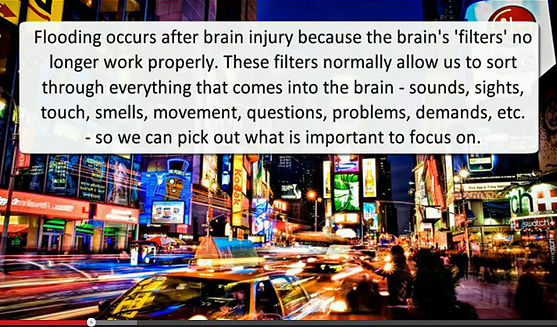
Sensory overstimulation, often referred to as “flooding,” is a condition frequently experienced after a traumatic brain injury (TBI). It occurs when the brain has difficulty filtering and processing incoming sensory information, resulting in overwhelm, fatigue, and cognitive overload.
A stimulus is any form of information perceived through the senses. These include:
External stimuli: sight, sound, smell, taste, and touch.
Internal stimuli: thoughts, emotions, pain, and body awareness (proprioception).
After a brain injury, the brain’s ability to prioritize and regulate these inputs may be impaired. As a result, everyday environments and routine activities can become mentally exhausting and overwhelming.
Common Symptoms of Sensory Overload in Brain Injury Survivors
Increased sensitivity to noise, light, or crowds, particularly in busy or unpredictable environments.
Feelings of overwhelm or anxiety during routine daily tasks.
Difficulty concentrating or following conversations when multiple sounds are present.
Impaired decision-making due to excessive incoming information.
Severe mental or physical fatigue from sustained sensory processing.
Irritability or frustration linked to overstimulation.
My Personal Experience With Sensory Overload
In December 2017, I experienced another tonic-clonic seizure that resulted in a mild traumatic brain injury (mTBI). While this was not my first head injury—I had sustained multiple concussions over the years—the impact this time was markedly different and far more disruptive to daily life.
Tasks that once felt basic—holding conversations, focusing on a television program, or running routine errands—became increasingly difficult. Sensory overload quickly became a daily and ongoing challenge.
This led to extensive personal research, online searches, participation in group discussions, and a focused effort to understand how sensory overload manifests after brain injury and how it can be managed effectively.
Through this process, I discovered Brain Injury Explanation, a well-developed educational resource for individuals with brain injuries, caregivers, and healthcare professionals.
Resources and Support for Sensory Overload and Brain Injury
This site provides extensive, well-organized information on brain injury symptoms, recovery considerations, and practical management strategies. Topics include:
Sensory overload (“flooding”) and coping approaches
Cognitive and emotional challenges after brain injury
Rehabilitation concepts and adaptive strategies
Guidance and support for caregivers and families
The platform also offers access to a private Facebook support group where survivors and caregivers can connect, share experiences, and learn from one another.
2. Sensory Overload and PTSD: Understanding the Connection
Mild traumatic brain injury is frequently associated with Post-Traumatic Stress Disorder (PTSD). Sensory overload is one of several overlapping symptoms between these conditions. Individuals may experience:
Hypervigilance, or heightened environmental sensitivity
Exaggerated startle responses to sudden sounds or movements
Difficulties with emotional regulation when overstimulated
Both PTSD and sensory overload may benefit from structured routines, calming techniques, and intentional environmental modifications.
3. Managing Sensory Overstimulation After Brain Injury
For individuals experiencing sensory overload, the following practical strategies may help reduce symptoms:
Reduce visual stimulation by dimming lights, minimizing screen brightness, and avoiding fluorescent lighting when possible.
Limit auditory input through the use of noise-canceling headphones in crowded or loud environments.
Schedule regular rest periods and avoid stacking high-demand activities back to back.
Use technology intentionally by limiting notifications and screen exposure.
Identify personal triggers by tracking environments or activities that worsen symptoms.
Incorporate calming techniques such as controlled breathing, meditation, or deep-pressure tools like weighted blankets.
Living with sensory overload related to brain injury presents ongoing challenges, but support and effective strategies do exist. Education, shared experience, and access to reliable resources can make a meaningful difference.
I am deeply grateful for platforms like Brain Injury Explanation and the broader online communities that offer clarity, validation, and support. Whether you are a survivor, caregiver, or healthcare professional, I encourage you to explore these resources and share them with others who may benefit.
If you or someone you know has experienced sensory overload following a brain injury, thoughtful discussion and shared insight can help move awareness forward.
Stay informed. Stay engaged. Continue advocating.
Disclaimer
The content provided here, including blog posts, shared materials, and external links, is for informational purposes only and is not intended to replace professional medical advice, diagnosis, or treatment. Always consult a qualified healthcare professional before making changes to medical care, medications, diet, exercise, or supplementation.
David Julian, Natural Vitality Advocate, is not a licensed medical professional. The views expressed are personal and informational and do not guarantee accuracy or completeness.
David Julian is not affiliated with Natural Vitality or NaturalVitality.com and does not promote or sell their products.
I’m about to go speak to NAMI Ohio’s statewide conference, Fulfilling the Promise. These are the remarks I prepared for my speech.
Before I begin, I want to warn you that this talk touches on many triggering subjects, including self-harm and suicide. I also want you to know that I’m speaking from my personal experience, and that if you or someone you know may be living with mental illness, please talk to a licensed and qualified medical professional, because I am not a doctor.
The content on this site, including blog posts, shared material, and external links, is for informational purposes only and is not a substitute for professional medical advice, diagnosis, or treatment. Always consult a qualified healthcare professional before making any changes to your health regimen, including medications, diet, exercise, or supplementation.
David Julian, Natural Vitality Advocate, is not a licensed medical professional. The views expressed in this blog and shared content are those of the respective authors and do not guarantee accuracy, completeness, or reliability.
David Julian is not affiliated with Natural Vitality or NaturalVitality.com. He does not promote, sell, or take a position for or against them.





 Natural Vitality Advocate